


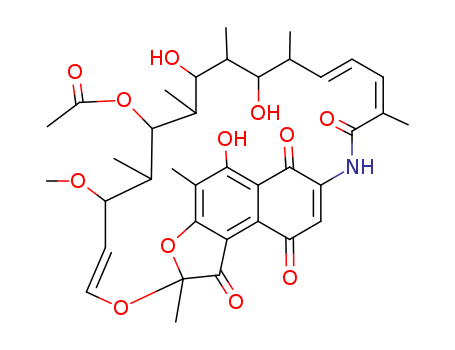
| 货号 | 规格 | 价格 | 上海 | 北京 | 珠海 | 重庆 | 武汉 | 购买数量 |
|---|---|---|---|---|---|---|---|---|
S56764-1ml促销 |
10mM in DMSO | ¥206.00 ¥160.00 |
8 | - | - | - | - |
|
| 产品描述: | Rifamycin S is a quinone and an antibiotic agnet against Gram-positive bacteria (including MRSA). Rifamycin S is the oxidized forms of a reversible oxidation-reduction system involving two electrons. Rifamycin S generates reactive oxygen species (ROS) and inhibits microsomal lipid peroxidation. Rifamycin S can be used for tuberculosis and leprosy.;Rifamycin S is a quinone and an antibiotic agnet against Gram-positive bacteria (including MRSA). Rifamycin S is the oxidized forms of a reversible oxidation-reduction system involving two electrons. Rifamycin S generates reactive oxygen species (ROS) and inhibits microsomal lipid peroxidation. Rifamycin S can be used for tuberculosis and leprosy. | ||||||||||||||||||||
|---|---|---|---|---|---|---|---|---|---|---|---|---|---|---|---|---|---|---|---|---|---|
| 靶点: | Gram-positive bacteria;Reactive oxygen species (ROS) | ||||||||||||||||||||
| 体内研究: | Rat liver sub-mitochondrial particles also generated hydroxyl radical in the presence of NADH and Rifamycin S. NADH dehydrogenase (complex I) as the major component involved in the reduction of Rifamycin S. Compared to NADPH, NADH is almost as effective (Rifamycin S) in catalyzing the interactions of these antibiotics with rat liver microsomes. Rifamycin S is shown to be readily reduced to Rifamycin SV, the corresponding hydroquinone by Fe(II). Rifamycin S forms a detectable Fe(II)-(Rifamycin S)3 complex. The Fe:ATP induced lipid peroxidation is completely inhibited by Rifamycin S. Rifamycin S can interact with rat liver microsomes to undergo redox-cycling, with the subsequent production of hydroxyl radicals when iron complexes are present. | ||||||||||||||||||||
| 保存条件: | -80℃(运输条件:冰袋低温运输) | ||||||||||||||||||||
| 配置溶液浓度参考: |
|
||||||||||||||||||||
| 注意: | 部分产品我司仅能提供部分信息,我司不保证所提供信息的权威性,仅供客户参考交流研究之用。 |


 上海工商
沪公网安备 31011702002021号
上海工商
沪公网安备 31011702002021号
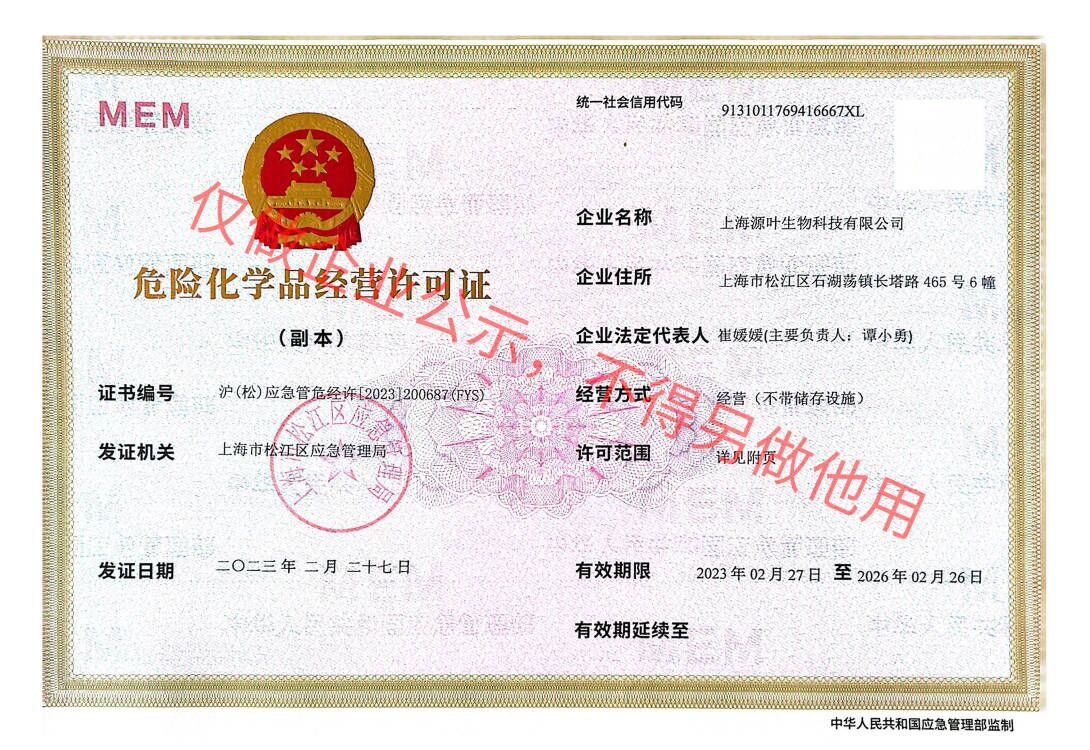 危险品化学品经营许可证(不带存储)
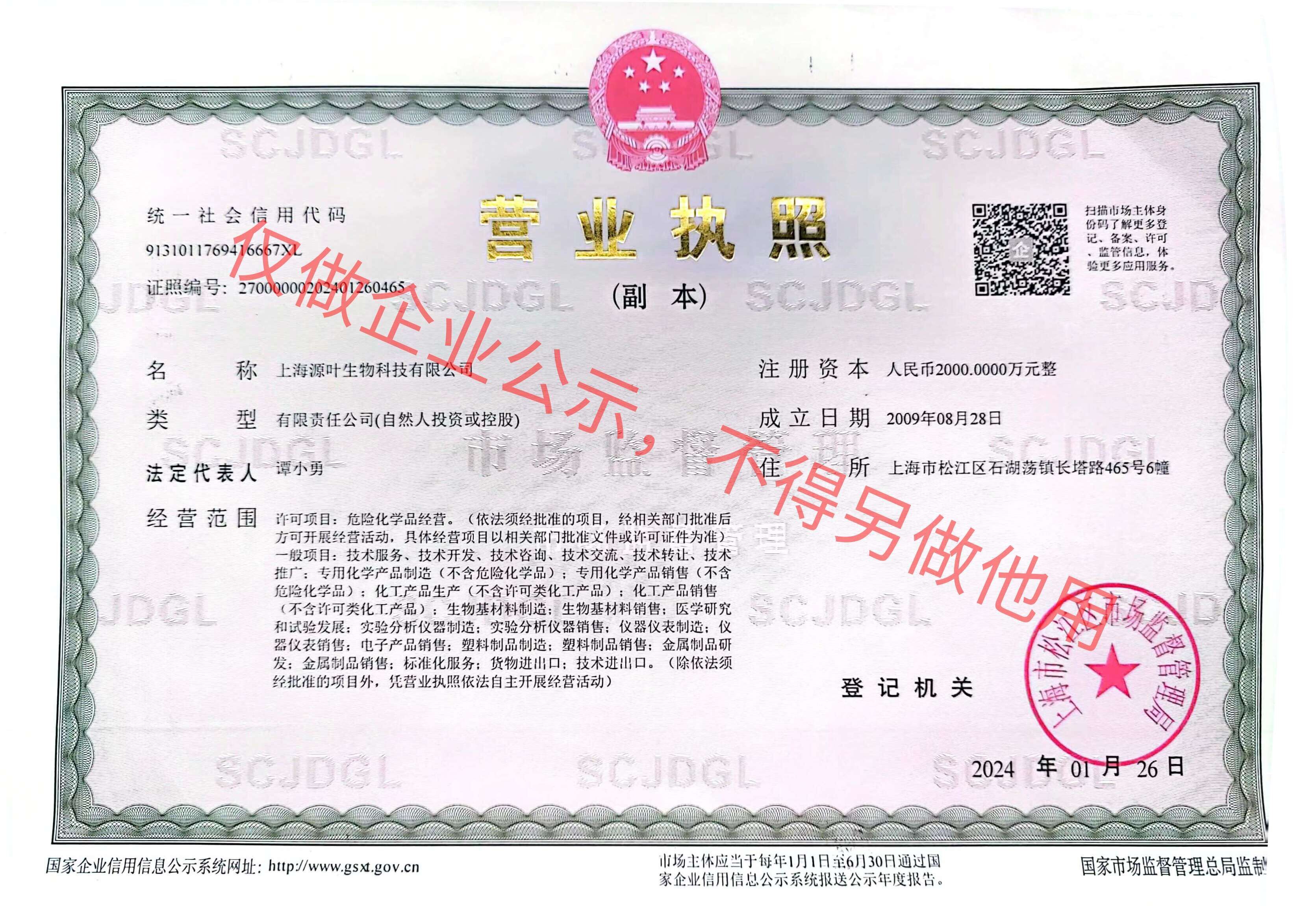 营业执照(三证合一)

 北京
北京