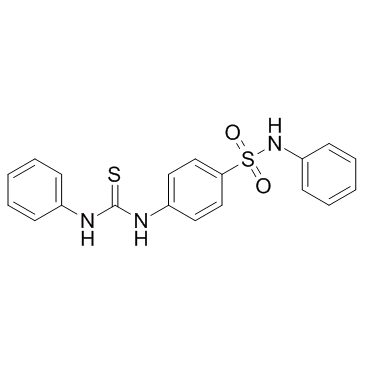
| 产品描述: | LED209 is a potent small molecule inhibitor of bacterial receptor QseC, is a potent prodrug that is highly selective for QseC. Target: Antibacterial LED209 has desirable pharmacokinetics and does not present toxicity in vitro and in rodents. This is a unique antivirulence approach, with a proven broad-spectrum activity against multiple Gram-negative pathogens that cause mammalian infections.The LED209 QseC inhibitor has a unique mode of action by acting as a prodrug scaffold to deliver a warhead that allosterically modifies QseC, impeding virulence in several Gram-negative pathogens.[1] LED209 is QseC sensor kinase inhibitor , as a potential lead compound to combat infections with Legionella or Mycobacterium spp. [2] LED209 inhibits the binding of signals to QseC, preventing its autophosphorylation and consequently inhibiting QseC-mediated activation of virulence gene expression. LED209 inhibits EHEC virulence traits in vitro. LED209 markedly inhibits the virulence of several pathogens in animals. Inhibition of signaling offers a strategy for the development of broad-spectrum antimicrobial drugs. |
| 靶点: |
Bacterial;Antibacterial |
| 体内研究: |
LED209 (20 mg/kg,口服,腹腔注射鼠伤寒沙门氏菌前 30 分钟,单剂量) 可保护小鼠免受鼠伤寒沙门氏菌感染,以及F. tularensis 感染 (感染前 1、3、6、9 或 24 小时给小鼠口服)。 |
| 参考文献: |
1. Curtis MM, et al. QseC inhibitors as an antivirulence approach for Gram-negative pathogens. MBio. 2014 Nov 11;5(6):e02165. 2. Harrison CF, et al. Adrenergic antagonists restrict replication of Legionella. Microbiology. 2015 Jul;161(7):1392-406. 3. Rasko DA, et al. Targeting QseC signaling and virulence for antibiotic development. Science. 2008 Aug 22;321(5892):1078-80. |
| 溶解性: |
Soluble in DMSO |
| 保存条件: |
-80℃(运输条件:冰袋低温运输) |
| 配置溶液浓度参考: |
|
1mg |
5mg |
10mg |
| 1 mM |
2.608 ml |
13.038 ml |
26.076 ml |
| 5 mM |
0.522 ml |
2.608 ml |
5.215 ml |
| 10 mM |
0.261 ml |
1.304 ml |
2.608 ml |
| 50 mM |
0.052 ml |
0.261 ml |
0.522 ml |
|
| 注意: |
部分产品我司仅能提供部分信息,我司不保证所提供信息的权威性,仅供客户参考交流研究之用。 |




 上海工商
上海工商
 危险品化学品经营许可证(不带存储)
 营业执照(三证合一)

 北京
北京